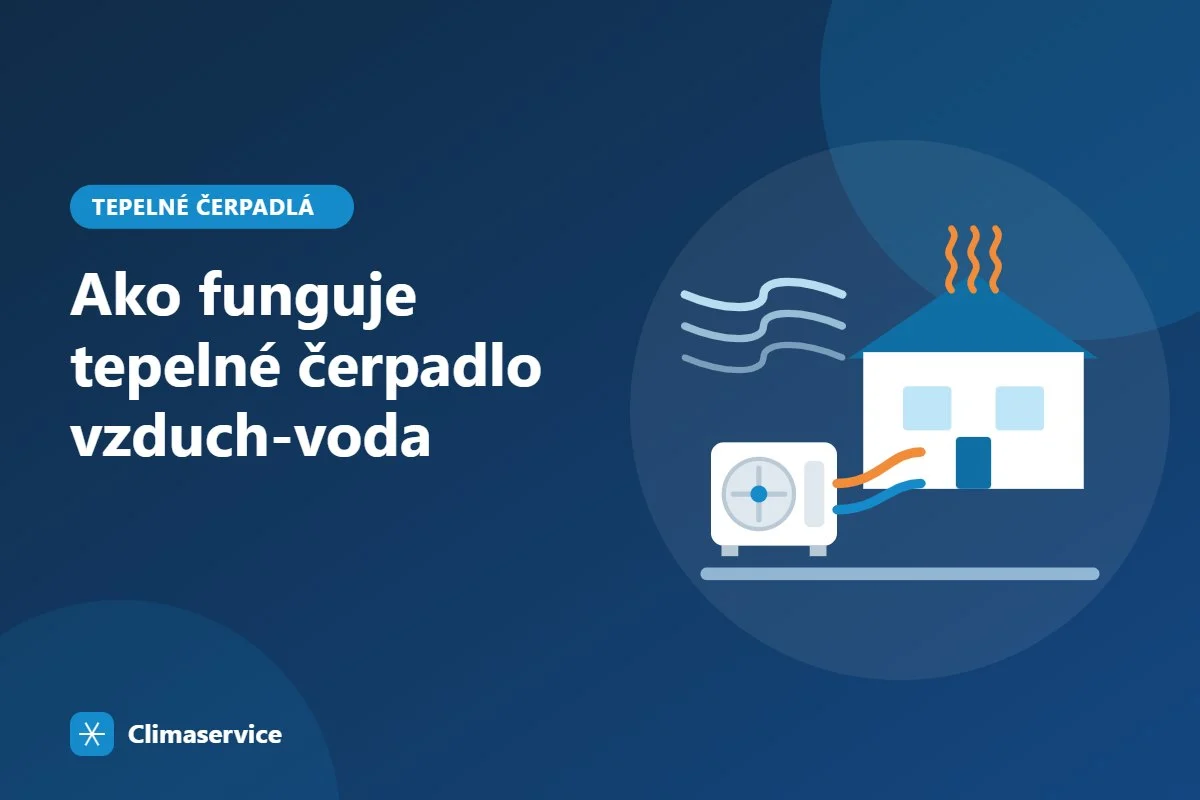
An air-to-water heat pump takes heat from the outdoor air and uses electricity to transfer it to water, which heats the house and provides hot water. It does not produce heat by burning anything – it only moves heat, much like a fridge, just in the opposite direction.
The principle in four steps
- The evaporator in the outdoor unit takes heat from the air. In the process the refrigerant evaporates – even at low outdoor temperatures.
- The compressor compresses the refrigerant vapour, which raises its temperature.
- The condenser transfers the heat to the water in the heating system.
- The expansion valve reduces the refrigerant pressure and the cycle repeats.
Where the savings come from
Electricity powers the compressor and pumps, but most of the heat comes from the air. The ratio between the heat supplied and the electricity consumed is expressed by the coefficient of performance (COP) and, for the whole year, the SCOP. Their value depends on the outdoor temperature and the water temperature the house needs.
What affects efficiency
- heating water temperature – low-temperature underfloor heating is ideal for a heat pump (Underfloor heating and a heat pump: why they complement each other),
- the insulation of the house – the lower the heat loss, the less work there is,
- correct output – What heat pump output do I need?,
- control settings – weather-compensated control based on the outdoor temperature.
Heating, hot water and cooling
A heat pump provides heating and hot water. With a suitable type and heating system, it can also cool in summer. We explain the difference from an air conditioner in the article What is the difference between an air conditioner and a heat pump?.
Daikin heat pumps
Daikin offers air-to-water heat pumps in the Daikin Altherma range. Read more about choosing in the article A Daikin heat pump for a family house: how to choose and on the Daikin heat pumps page.
Need advice on air conditioning or a heat pump?
We will prepare a free, no-obligation quote for a Daikin unit, installation, servicing or cleaning.
Free quote